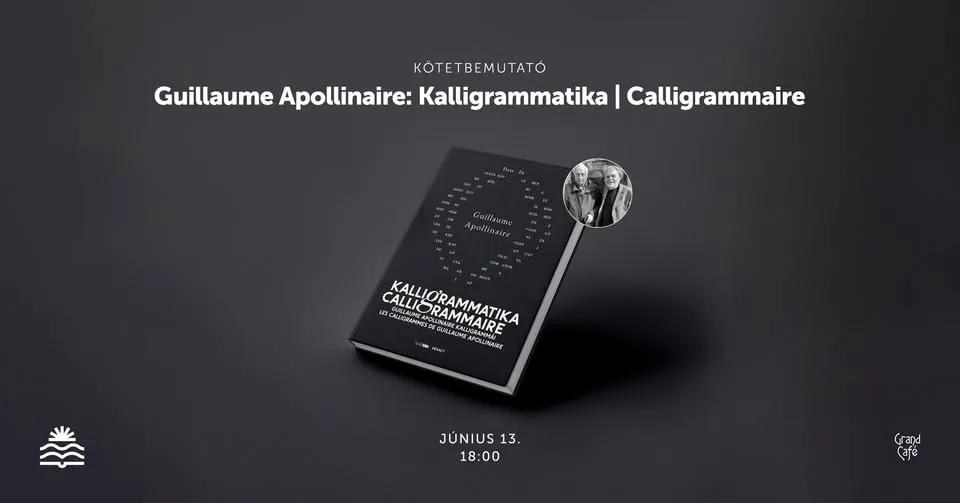
Tie-up , Guillaume Apollinaire: Calligrammatics , Calligrammaire.
If you're unsure about the language or anything else regarding the event, please contact the event organizer for confirmation.
You are looking for a new language with which no grammatical language can do anything. (Guillaume Apollinaire)
Gyula Végh, who edited, translated and typographed the volume, talks with literature historian Miklós Magyar.
Gyula Végh, a living artist in Szeged, has undertaken the grandiose task of collecting all of Apollinaire's calligrams, even those that have not been found in the most complete collection in French, Claude Debon's book published in 2018. This bilingual representative volume is of literary historical importance, we can be proud of it here in Szeged.
Apollinaire's five poems published in the magazine in 1914, which he recognized as the first calligrams of posterity, he first referred to as the lyrical ideologies. He created the calligram in Greek (beautiful) and gram (letter) with word-making ingenuity prior to their appearance. (The word surrealism comes from him as well.) The term "calligrammatics" that has not yet existed is due to the creator of this volume. Its meaning is the art of the calligrams. So far, we have known the Hungarian translation of five calligrams. We are also proud of Gyula Végh because, from September 1996 until the release of the FB, he edited our grand showbooks with exceptional skill and visual taste on paper. His conversational partner Miklós Magyar also published the book "Paris Yesterday and Today" at the Napiút Publishing House this year.
The two authors sign at Dugonics Square from 10 a.m. on June 14.
Guillaume Apollinaire: Kalligrammatika. 2025, Sunway Publisher, Bp, Vexact Publisher, Szeged